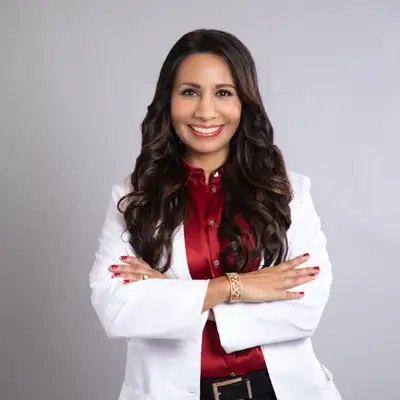
Your Genes Are Lying to You: Dr. Florence Comite on Longevity, Sleep & the Biomarkers That Predict How Fast You Age
[00:00:00] Florence Comite, MD: I've heard people say, "I'll sleep when I'm dead." Mm.
[00:00:01] Dr. Taz: And
[00:00:03] Florence Comite, MD: I'm like, "No, you're gonna die pretty [00:00:05] soon if you don't get enough sleep." Sleep is probably primarily the number one [00:00:10] modifier of genetic destiny. If you get good sleep, and it's [00:00:15] not just quantity, it's quality, the quality of your deep sleep and your [00:00:20] REM sleep, you are gonna protect yourself from almost every disease of aging.
[00:00:23] Dr. Taz: Oh my
[00:00:23] Florence Comite, MD: gosh. And most [00:00:25] people- Don't sleep ... aren't aware of that because there's social jet lag, there's a lot of travel. I've heard people [00:00:30] say, "I'll sleep when I'm dead."
[00:00:32] Dr. Taz: Many people believe that their health [00:00:35] is largely determined by genetics. If heart disease, diabetes, or dementia [00:00:40] run in the family, it can feel inevitable.
[00:00:43] Dr. Taz: But what if your genes don't have [00:00:45] to determine your future? My next guest believes that understanding your body's unique [00:00:50] biomarkers may be the key to living longer and healthier.
[00:00:53] Florence Comite, MD: 31-year young man [00:00:55] who happened to n- I know well, and I didn't know his story. Yeah. I didn't know anything [00:01:00] about his personal h- story.
[00:01:01] Florence Comite, MD: He did the five biomarkers. His testosterone was [00:01:05] extremely low. He was only 30. His cholesterol risk ratio, instead of being under two, was [00:01:10] close to six. Mm. His insulin was elevated, not sky-high, but about seven, [00:01:15] fasting. His glucose was elevated some days and some days not, and I was worried about him, 'cause [00:01:20] we collected some family history, and he mentioned that his father had had heart attacks and strokes.[00:01:25]
[00:01:25] Florence Comite, MD: So I asked him, exactly, you know, "What, how's your father doing?" And he said, "Oh, he [00:01:30] died of the last massive heart attack at 60." Mm. So there's a group of men and [00:01:35] women in the Asian world and in the Ashkenazi Jewish, depending on- Mm-hmm ... the countries and [00:01:40] their, their genetic makeup-
[00:01:41] Dr. Taz: Right ...
[00:01:42] Florence Comite, MD: um, that have signs and symptoms of [00:01:45] disease much younger in life, like 20 years ahead.
[00:01:49] Florence Comite, MD: So instead of looking [00:01:50] like that at 50, he was 30, and he had the symptoms. He had already a decreased [00:01:55] libido. Libido was not what it should be. He was putting on weight despite, like, being pretty active. [00:02:00] And those are the kind of signals that the earlier you know, the more you can protect your [00:02:05] future health.
[00:02:05] Florence Comite, MD: Right.
[00:02:06] Dr. Taz: Florence Comite, MD, is a clinician scientist, [00:02:10] endocrinologist, and leading expert in precision medicine and longevity science. Through her [00:02:15] decades of clinical research and patient care, she has focused on understanding how [00:02:20] biomarkers, genetics, and lifestyle influence biological aging and [00:02:25] chronic disease.
[00:02:26] Dr. Taz: Let's welcome Dr. Florence Comite to the show. [00:02:30] This episode is sponsored by WHOLEplus, a holistic health platform built [00:02:35] around education, personalization, and integrative care. WHOLEplus blends [00:02:40] holistic, integrative, and functional medicine clinics with learning resources [00:02:45] like blogs, YouTube videos, and of course, this podcast, so you're not just treated, you're [00:02:50] informed.
[00:02:51] Dr. Taz: The platform also includes holistic health quizzes and a curated wellness shop, [00:02:55] helping you make choices that support your body at the root level. [00:03:00] WholePlus is holistic healthcare designed for real life. Visit us at [00:03:05] wholeplus.co to learn more about the platform. Again, that's [00:03:10] H-O-L-P-L-U-S dot C-O. All right, Dr.
[00:03:11] Dr. Taz: Kamate. I'm gonna call you Florence from here on out, [00:03:15] but thank you so much for being on the show today. So I can't pass [00:03:20] an Instagram post without it talking about longevity, the latest longevity [00:03:25] conference, latest longevity hack. You know, I feel like that word is buzzing right [00:03:30] now and trending right now, but you're somebody who's been in the field for a long time.
[00:03:33] Dr. Taz: You've been thinking about [00:03:35] longevity and aging and working on it, and probably have, you know, [00:03:40] a more sort of a grounded approach to the science and to the practice [00:03:45] of healthy aging and longevity. So I'm so pleased to welcome you to the show today. [00:03:50] Tell us a little bit about your background in this field, and then we'll get into [00:03:55] what we all need to really be thinking about.
[00:03:58] Florence Comite, MD: Excellent. Yes, you're [00:04:00] correct. I, um, I've been called the OG of longevity. It really started [00:04:05] with how do we stop aging to protect us from disorders of aging. So I used to think of [00:04:10] diabetes, heart disease, osteoporosis, cancer as related to aging [00:04:15] because it started emerging in our 30s and then just gets worse every decade.[00:04:20]
[00:04:20] Florence Comite, MD: Mm-hmm. And so I started on that path thinking we should stop it way before people actually get [00:04:25] symptomatic, and you can see it at the cellular level in the metabolism, in hormones, in the immune [00:04:30] system. And by- How
[00:04:31] Dr. Taz: early can you see it, out of curiosity?
[00:04:33] Florence Comite, MD: You can see it in children. Wow. [00:04:35] Because basically, depending on the life a child lives, um, and the [00:04:40] parental inheritance-
[00:04:41] Dr. Taz: Yeah
[00:04:41] Florence Comite, MD: the patterns get passed down through the generations. And so [00:04:45] that was one of my theories when I started women's health at Yale in the '90s, by knowing the [00:04:50] woman and then perhaps meeting the partner-
[00:04:52] Dr. Taz: Mm-hmm ...
[00:04:52] Florence Comite, MD: I could then extrapolate, and I do it all the time [00:04:55] now. When I know the genetic patterns or I know what appears, I'll tell them exactly how [00:05:00] to manage their children, what to do with vitamins, what to do with nutrients, how they [00:05:05] need to move or-
[00:05:06] Dr. Taz: Right
[00:05:06] Florence Comite, MD: those kinds of aspects of health.
[00:05:08] Dr. Taz: Well, that's an area of health [00:05:10] that, you know, even for me, like we weren't really trained in. And if we think to how [00:05:15] pediatrics, women's health, even men's health is practiced today, it's not really [00:05:20] Practiced in that way. Like, these are the genetic tendencies, therefore this is the way to [00:05:25] eat, this is the way to move, this is the way to, like, you know, supplement, all these different things.
[00:05:29] Dr. Taz: [00:05:30] Now, in our practice, we do have some of that testing where we're able to start advising people that way, [00:05:35] but it's been newer. But again, you've been in the field for a long time.
[00:05:38] Florence Comite, MD: Yeah. Well, we practice, [00:05:40] as you know, as a trained physician in, I think, your three, you know, fields that you're trained in. Yeah,
[00:05:44] Dr. Taz: [00:05:45] yeah.
[00:05:45] Florence Comite, MD: I too am trained in multiple fields of endocrinology, so everything from fertility, [00:05:50] growth, and development, to puberty through menopause, and andropause in men, which [00:05:55] still many conventional doctors don't really think men's hormones change with age. Yeah. [00:06:00] We know they do. They change. You've seen the same men I do.
[00:06:02] Florence Comite, MD: With, with them,
[00:06:02] Dr. Taz: they
[00:06:02] Florence Comite, MD: change. Right.
[00:06:03] Dr. Taz: Yes.
[00:06:04] Florence Comite, MD: [00:06:05] Um, and there are changes that I think- Right ... affect midlife crisis. Right. I think that's a theory I'll be happy to tell you about. [00:06:10] Absolutely. No, I wanna hear... Well, I know that, but I wanna hear your- Well, when I started women's health-
[00:06:14] Dr. Taz: Yeah ...
[00:06:14] Florence Comite, MD: I [00:06:15] really thought women would complain.
[00:06:16] Florence Comite, MD: These were women 35 to 40, 45, PMS meets, you know, [00:06:20] perimenopause. Yeah. Not a pretty picture. And I thought it would be m- mostly weight, which is an [00:06:25] issue. We women start putting weight around our trunk around that s- time, because we're losing [00:06:30] testosterone and our hormones aren't quite the same, even if we're doing exactly the right thing, and we [00:06:35] have been.
[00:06:35] Florence Comite, MD: But it was male sexual function that the women's health, that in the [00:06:40] women's, that the women that I was seeing-
[00:06:41] Dr. Taz: Mm-hmm ...
[00:06:42] Florence Comite, MD: in the Fairfield County, mostly from Yale, [00:06:45] New Haven, uh, Connecticut through Manhattan, were complaining about. Mm. So I [00:06:50] thought about that theory way back when and said, "You know, I wonder if it's just we- proof of [00:06:55] wanting to be on your A-game in the bedroom-" Yeah.
[00:06:57] Florence Comite, MD: and the boardroom." Yeah. And subsequently, I started taking care of [00:07:00] a lot of men in New York.
[00:07:01] Dr. Taz: Mm-hmm.
[00:07:01] Florence Comite, MD: And it's absolutely the truth. You know? Mm. It, it isn't just sexual [00:07:05] function, it's energy and power.
[00:07:06] Dr. Taz: And cognitive function
[00:07:07] Florence Comite, MD: too, right? Yes. Yeah, so yeah. Cognitive, memory, it all is [00:07:10] affected. But from my point of view, you see this genetically because we [00:07:15] actually repeat the patterns we've inherited.
[00:07:17] Florence Comite, MD: It's a question of how we live life [00:07:20] and what we could do to modify expression of genes with epigenetics.
[00:07:23] Dr. Taz: Mm-hmm.
[00:07:24] Florence Comite, MD: So the switches that [00:07:25] people talk about, those are real, and genetics isn't a perfect science [00:07:30] either- Right ... in that I'm an identical twin, but my identical twin and I are not exactly the same.
[00:07:34] Florence Comite, MD: [00:07:35] Mm. There are distinct differences between us. One example I give often is I could [00:07:40] live on sushi and sashimi. My sister doesn't like fish.
[00:07:42] Dr. Taz: Mm.
[00:07:43] Florence Comite, MD: She's an amazing gardener. I [00:07:45] kill plants. Um, she's had a gallbladder out. My gallbladder's fine, but I have a [00:07:50] GI thing she doesn't have. She can take metformin, I can't.
[00:07:52] Florence Comite, MD: Interesting. So there's a lot of distinct differences that [00:07:55] you wouldn't think would be real, but they are.
[00:07:58] Dr. Taz: Mm. So in this [00:08:00] field of longevity, you know, I'm curious to, to, to kinda get your perspective, [00:08:05] what do we have wrong currently? Where do we need to be shifting towards, [00:08:10] you know, ef- when you look upon and reflect upon your work?
[00:08:13] Dr. Taz: Because right now, [00:08:15] again, I hear a lot of like, "Here's how to biohack. Here's the best diet. Here's the best [00:08:20] supplement. Who needs to be on creatine?" You know, these are, these are the questions coming at me [00:08:25] constantly. Do I do red light? Do I do this? Do I... You know? So- When people hear [00:08:30] longevity, I think they automatically hear longevity, and then they hear biohacking, and then they might [00:08:35] hear hormones and hormone replacement therapy.
[00:08:37] Dr. Taz: And now we're also hearing peptides [00:08:40] and GLP-1s and all that other stuff. That is the, to me, the cultural longevity box [00:08:45] currently. Where would you like to see this conversation shift towards? [00:08:50]
[00:08:50] Florence Comite, MD: So tho- those, I think you hit on every nuance. And I'll tell you, I'm [00:08:55] lucky and I've had great mentors, but I've worked in the field of peptides, hormones, [00:09:00] metabolism my entire career.
[00:09:02] Florence Comite, MD: Plus, I've had an innate interest in genetics being born an [00:09:05] identical twin. Right. So for me, it was an organic process where what's [00:09:10] absolutely missing is N of 1. So I called the work I did, and I designed it as a [00:09:15] f- going forward perspective protocol because you know, as I know, in medicine, [00:09:20] it's not just what you observe.
[00:09:21] Florence Comite, MD: You have to actually prove outcomes.
[00:09:23] Dr. Taz: Mm.
[00:09:24] Florence Comite, MD: And I knew that [00:09:25] the theories I had back 20, 30 years ago needed to have proof of concept and needed to [00:09:30] show that we could actually change the direction of your future health trajectory by [00:09:35] drilling into what made you you, what made me me- Mm-hmm ... and even my identical twin different than me.[00:09:40]
[00:09:40] Florence Comite, MD: And so I designed it to be able to study people at specific times [00:09:45] and say, "You know what? Intermittent fasting is right for you, but For your best [00:09:50] friend, no. Your best friend's glucose goes too low-
[00:09:52] Dr. Taz: Right ...
[00:09:53] Florence Comite, MD: and it would be dangerous. And then there's a [00:09:55] group of people that have genes that say you can intermittently fast all you want, it's not gonna have an impact on your [00:10:00] system.
[00:10:00] Florence Comite, MD: And that's what I think is missing, the notion that you can't generalize [00:10:05] even outstanding evidence-based medicine done in thousands if not millions of people [00:10:10] to the average, because none of us is average. Each one of us is distinctly different.
[00:10:14] Dr. Taz: Well, [00:10:15] that's how I practice, and that's how I've been practicing, but the pushback has always been [00:10:20] this is not, quote-unquote, evidence-based.
[00:10:21] Dr. Taz: I've always practiced with the N of one, right? You are you. [00:10:25] We're gonna try to figure out your puzzle. It's different from my puzzle, and sometimes we have [00:10:30] the benefits of testing to go along with that like we do today. Sometimes in the past, you know, 15, 20 [00:10:35] years ago, we didn't necessarily. But how do we marry this, like, cultural [00:10:40] norm of, or expectation of traditional medicine to be like where's the research, [00:10:45] where's the evidence-based research, where's this, where's that, with this fact that [00:10:50] everybody's unique and individual and coming in with their own, you know, determinants, right?
[00:10:54] Dr. Taz: [00:10:55] Genetic, social, environmental, all of these different things. How do we, how do we navigate that? [00:11:00]
[00:11:00] Florence Comite, MD: So that's a deeper question, and that's what frustrated me when I started women's health and why I started [00:11:05] women's health at Yale in the 1990s, because the question to me was how much could I [00:11:10] learn about you?
[00:11:11] Florence Comite, MD: And the way I designed and how I thought about it then and now [00:11:15] is by getting the facts of your health story, by understanding how you live life, [00:11:20] by understanding what your relatives are like, even what your relationships are with your friends [00:11:25] and relatives. That says a lot about what's happening inside- Mm-hmm
[00:11:28] Florence Comite, MD: of you and where you're gonna [00:11:30] head as you age and what we have to watch out for. So I started way [00:11:35] back. So I started with Simple Labs back in the '90s. Yeah. And I was able to [00:11:40] see these changes at the cellular level because our bodies do change and age. Um, [00:11:45] and I think where we can make a difference is by getting as much information, [00:11:50] asking Partnering our patients to say, "Listen, find, try to find out [00:11:55] what happened to your grandparents.
[00:11:56] Florence Comite, MD: What about your aunts, uncles, and cousins?" And then take the [00:12:00] data, and I've collected that data prospectively so I can now apply it. For [00:12:05] example, in the book Invincible: Defy Your Genetic Destiny to-
[00:12:08] Dr. Taz: Mm-hmm. Oh,
[00:12:08] Florence Comite, MD: right here ... live better longer. Yeah. [00:12:10] Um, I can actually specifically draw five biomarkers on [00:12:15] anyone, have them wear a continuous glucose monitor, get just enough [00:12:20] data to say, "This is where you need to start.
[00:12:22] Florence Comite, MD: These are the baby steps- Wow ... for you specifically." [00:12:25] And that's what I set out to do. I, I made it a protocol. Yeah. It's absolutely a protocol- Yeah ... that I can [00:12:30] define because I was trained as a clinical investigator at the NIH, so for [00:12:35] several years, and then I became an endocrinologist of various stripes and colors, and I was lucky enough to see [00:12:40] men, women, and children.
[00:12:41] Florence Comite, MD: So I got every decade of life and understood what optimal is. [00:12:45] And so I actually feel like it's a huge challenge to move from simple [00:12:50] biomarkers to, uh, insights and then take those insights and translate them into actionable [00:12:55] interventions. I think it's basically impossible.
[00:12:57] Dr. Taz: Yeah.
[00:12:57] Florence Comite, MD: I think knowing what's right and [00:13:00] wrong, because I'm sure we all know people in, in your practice.
[00:13:03] Florence Comite, MD: As a physician, what [00:13:05] you're bringing to bear on it is the old-fashioned type of medicine. What did, what did our, you [00:13:10] know, ancestors in medicine do when they were family practitioners? I don't know if you remember a guy- Mm-hmm ... on [00:13:15] TV called Marcus Welby. Yes. Right? Yes, yes, yes, yeah. And he knew you. He knew your parents.
[00:13:19] Florence Comite, MD: He knew the whole [00:13:20] family, yeah. Exactly. Yeah. And so there you can say, "Oh, Joe is coming to see me, and I see that he's not [00:13:25] thriving. Let me query him about stress and depression because I know his uncle was seriously [00:13:30] depressed. I know his mother had diabetes. His grandfather had a heart attack." And you can [00:13:35] take that old-fashioned medicine and apply it today.
[00:13:37] Florence Comite, MD: Mm-hmm. I used to actually think [00:13:40] family history was a poor man's genetic test, and now I know it's much richer.
[00:13:43] Dr. Taz: Mm-hmm.
[00:13:44] Florence Comite, MD: So [00:13:45] that is the kind of training in terms of extrapolating what is real about [00:13:50] each person and then using that information to help guide the next steps with action [00:13:55] based on data. So the reason I called it precision medicine is that [00:14:00] most doctors, we're personal.
[00:14:01] Florence Comite, MD: We have to be personal. We're up front and front and personal with our human being in [00:14:05] front of us.
[00:14:05] Dr. Taz: Right.
[00:14:05] Florence Comite, MD: We want the best for them. A lot of them tell us things that, that their [00:14:10] nearest and dearest don't know.
[00:14:11] Dr. Taz: Yeah.
[00:14:11] Florence Comite, MD: I still remember a gentleman in my internship at Yale [00:14:15] who told me he was missing a toe, but he always wore a sock 'cause he never wanted to tell his wife.[00:14:20]
[00:14:20] Dr. Taz: Mm-hmm.
[00:14:20] Florence Comite, MD: And I think that that's an honor that they trust us, and that by [00:14:25] taking that information and turning it around, we can make a difference with data. [00:14:30] So the data to me is what's important. How do you interpret all these biomarkers [00:14:35] that are- Right ... coming at us? Right. How do you integrate it with the choices somebody makes about sleep, food, [00:14:40] moving, stress, to make it a reality for each person?
[00:14:44] Dr. Taz: If you're [00:14:45] listening to this and thinking, "I know something is off in my body-" But [00:14:50] I don't know where to start," this is for you. That's why I created the [00:14:55] Circle. The Circle is my private community where I and my team focus on understanding [00:15:00] your body, from hormones and stress to metabolic health and longevity, with [00:15:05] real-life guidance that you can actually use.
[00:15:07] Dr. Taz: This is about clarity and [00:15:10] consistency and support beyond the exam room, and maybe outside of all the [00:15:15] different appointments and experts that you've been running around to. You can try the Circle with a [00:15:20] one-month trial using the promo code Podcast at wholeplus.co/circle. Again, that's Whole Plus, wholeplus.co/circle.
[00:15:24] Dr. Taz: All [00:15:25] right, let's jump back into the episode. So I have two questions. So one, the, will you share the [00:15:30] five biomarkers with us? Absolutely. And then [00:15:35] the second is, was your optimal ever in line with
[00:15:38] Florence Comite, MD: conventional
[00:15:39] Dr. Taz: [00:15:40] standards of optimal? Very rarely. They overlap, [00:15:45] because
[00:15:46] Florence Comite, MD: here's how [00:15:50] conventional so-called you're in the normal range- Right
[00:15:52] Florence Comite, MD: is developed. They take 1,000 people [00:15:55] somewhere in the country, I used to use Oklahoma and then people from Oklahoma got upset with me, but all of us are [00:16:00] sick. Yeah. We're all brewing disease under the surface. Like, I have yet to meet somebody who [00:16:05] ha- and in thousands of people I've seen, who have optimal carbohydrate or sugar metabolism.
[00:16:09] Florence Comite, MD: [00:16:10] Mm. That's because it's a survival issue. We all have genes that dictate [00:16:15] what's gonna happen to us as we age in terms of sugar. We can get into that later. [00:16:20] So the optimal to me is based on evidence as to what will have the [00:16:25] best outcomes. One example is hemoglobin A1C. Yes. A hemoglobin A1C [00:16:30] under five is optimal.
[00:16:31] Florence Comite, MD: Mm. Not 5.1, 5.7- Interesting ... we [00:16:35] already know is pre-diabetes, 6.5 is diabetes. So many, [00:16:40] many clinicians will say, "Oh, it's a little high. Why don't you eat better and [00:16:45] work out?" And we know how much we're trained in medical school about eating- Right ... working out-
[00:16:48] Dr. Taz: Right ...
[00:16:49] Florence Comite, MD: and sleeping.
[00:16:49] Dr. Taz: [00:16:50] Right.
[00:16:50] Florence Comite, MD: Next to nothing. And so by understanding that that's not optimal and we're [00:16:55] heading in the wrong direction and we need to reverse it, and even that's not enough, because [00:17:00] I always had a hemoglobin A1C of under five-
[00:17:02] Dr. Taz: Mm-hmm.
[00:17:03] Dr. Taz: Okay ...
[00:17:03] Florence Comite, MD: uh, which sounds fantastic, right? It's [00:17:05] 100 days, a average of sugar, of your average sugar. But in reality, my [00:17:10] sugar would go up and down, so it would spike and dip, so that the average looked great, [00:17:15] but not the real numbers.
[00:17:16] Dr. Taz: Mm.
[00:17:16] Florence Comite, MD: And while I don't demonize sugar, it affects every [00:17:20] system in the body.
[00:17:20] Dr. Taz: Right.
[00:17:21] Florence Comite, MD: So those are the kinds of- Optimal that I think [00:17:25] about, what exactly for each decade of life, where should you be? And since we [00:17:30] know from other fields even, like athletics, 25 to 30, getting pregnant, [00:17:35] 25 to 30, that's peak time in our life. That's when we can burn the candle at both ends no matter how- [00:17:40] Right,
[00:17:40] Dr. Taz: right
[00:17:40] Florence Comite, MD: we're groomed and how we're raised. But it starts dissipating with age. [00:17:45] After that. Right. So optimal is aiming towards what really should be as [00:17:50] close as the best you can be.
[00:17:51] Dr. Taz: So what are those biomarkers then, out of curiosity? A1C [00:17:55] we track all the time. We'll track a fasting insulin. We'll track inflammation markers.
[00:17:59] Dr. Taz: Talk to me about what [00:18:00] you think is, you know, what are we missing? Yeah. What are the things we really need to- Okay, sure, um ... sink our teeth into?
[00:18:04] Florence Comite, MD: [00:18:05] Right. So this is what my research has shown. In doing hundreds of thousands of biomarkers, each person [00:18:10] when they first work with us get about 125. But after [00:18:15] investigating and studying it, it was clear that five key biomarkers.
[00:18:19] Florence Comite, MD: We look at [00:18:20] carbohydrate metabolism, 'cause as I just explained- Yeah ... my hemoglobin A1C wasn't reflective [00:18:25] of the ups and downs in my sugar.
[00:18:26] Dr. Taz: Mm.
[00:18:27] Florence Comite, MD: So fasting sugar, which is common, [00:18:30] fasting insulin, which if it starts rising even to two to five, [00:18:35] which is what general medicine thinks is fine, but certainly most people are higher.
[00:18:39] Florence Comite, MD: And [00:18:40] even on the Quest sheet-
[00:18:41] Dr. Taz: Mm-hmm ...
[00:18:41] Florence Comite, MD: at the bottom it says you can have an insulin of 19- Right ... when you wake up in the [00:18:45] morning- Oh, yeah ... and you're okay.
[00:18:45] Dr. Taz: Yeah.
[00:18:46] Florence Comite, MD: Totally untrue. Mm. The other two that really add [00:18:50] value is free testosterone- Mm-hmm ... not total- Mm-hmm ... but free. Total is wrapped up in [00:18:55] protein. And the last one is cholesterol risk ratio.
[00:18:57] Florence Comite, MD: Mm. And the reason we use those, and [00:19:00] it's been studied in depth, is that the cholesterol risk ratio also gives you total [00:19:05] and f- and good cholesterol, HDL, so-called good cholesterol. And by having that [00:19:10] under two, having testosterone six to 30 in women, free testosterone, [00:19:15] in men 180 to 250, having, um, a hemoglobin A1c [00:19:20] of less than five, sugar fasting of 70 to 80, and an insulin that's [00:19:25] undetectable, that's optimal.
[00:19:26] Florence Comite, MD: Mm. And I have yet to see that in one human being.
[00:19:28] Dr. Taz: Really?
[00:19:29] Florence Comite, MD: So, yes. Wow. [00:19:30] Because we're groomed to survive, and the genes we've inherited all dictate that as we [00:19:35] age and lose muscle, we're going to become pre-diabetic and diabetic. Mm. And that's why there are [00:19:40] millions of us out there who have that condition.
[00:19:41] Florence Comite, MD: With
[00:19:42] Dr. Taz: that issue. Yeah. Now, going all the way back to children, as you [00:19:45] were mentioning earlier, what are you seeing in kids?
[00:19:47] Florence Comite, MD: So I've been referred tons of children. [00:19:50] Yeah. And I'll-- I think of one off the top of my head. Typically, it's a child who's in a [00:19:55] family that are pretty healthy. They monitor everything.
[00:19:57] Florence Comite, MD: There's not a whole lot of junk food. They [00:20:00] travel, they move, they try to sleep right. And one of the children just [00:20:05] can't lose weight or doesn't move enough or isn't athletic, and it turns out they usually have [00:20:10] metabolic syndrome. Mm-hmm. And it's already detectable because they may be doing everything right, [00:20:15] but they crave carbohydrates.
[00:20:16] Florence Comite, MD: They don't lose weight easily. They don't look like [00:20:20] children running around living life to the fullest, even as a teenager. Have you ever heard, for [00:20:25] example, a woman say, "My friends can eat everything, and I just- Oh, yeah ... look at food and I gain [00:20:30] weight"? Well, that's because they have usually an underlying genetic condition, and I have many [00:20:35] families like that.
[00:20:36] Florence Comite, MD: There's a genetic Ethnic component to it.
[00:20:38] Dr. Taz: Mm.
[00:20:39] Florence Comite, MD: So I have [00:20:40] people from Mexico-
[00:20:40] Dr. Taz: Mm-hmm ...
[00:20:41] Florence Comite, MD: um, Sephardic Jews who are from places like Morocco- Mm-hmm ... and [00:20:45] Iran and Iraq who harbor that. There's a lot of marrying within-
[00:20:49] Dr. Taz: Is [00:20:50] it the same, is it
[00:20:50] Florence Comite, MD: the same genetic profile? It's, it's very similar. What's the gene? It's adiponectin is great.
[00:20:53] Dr. Taz: Oh, okay.
[00:20:53] Florence Comite, MD: The gene specifically, [00:20:55] the RS sites-
[00:20:55] Dr. Taz: Okay ...
[00:20:56] Florence Comite, MD: I think would not be understood. Got it. But-
[00:20:58] Dr. Taz: Right ...
[00:20:58] Florence Comite, MD: the specifics, [00:21:00] adiponectin is low, insulin is high, sugar is too high. You do an oral glucose [00:21:05] tolerance test, and you do one that's three hours- Okay ... instead of the half an hour we get when we're pregnant-
[00:21:09] Dr. Taz: [00:21:10] Right
[00:21:10] Florence Comite, MD: you will see initially hyper- fasting hyperglycemia, high sugar, [00:21:15] fasting insulinemia, meaning your insulin is above five generally. Mm-hmm. And you go [00:21:20] through it, and the pattern teaches us what exactly your genetic... 'Cause the genes can be, there's so, [00:21:25] there are thousands of genes- Yeah ... that dictate that.
[00:21:26] Dr. Taz: Yeah.
[00:21:27] Dr. Taz: What about, I'm curious about the South Asian community, like, [00:21:30] you know, PCOS for example, there's a almost 70% prevalence of [00:21:35] PCOS in South Asian women, women of Indian descent- Yes ... which is really metabolic.
[00:21:38] Florence Comite, MD: I see a ton of it.
[00:21:39] Dr. Taz: It's [00:21:40] metabolic, right? Yeah. It's all
[00:21:40] Florence Comite, MD: insulin. I have a whole practice in, um, Palo Alto, and so prox- at least [00:21:45] 30% of my patients are Asian.
[00:21:46] Dr. Taz: Right.
[00:21:47] Florence Comite, MD: Yeah.
[00:21:47] Dr. Taz: Is there a genetic-
[00:21:48] Florence Comite, MD: Absolutely ... component to that? Not only that, [00:21:50] there's also a finding that I've seen in, in certain, um, populations of [00:21:55] Asians where they don't, they're unable to put on a lot of muscle as teenagers. And [00:22:00] frequently they'll, they'll call themselves, they say they're self-proclaimed geeks- Right
[00:22:03] Florence Comite, MD: 'cause they would be the last [00:22:05] one picked for sports. Right. And I see it in their families. I see it in the children, not every child, so it [00:22:10] depends on the inheritance pattern. I've seen the same thing in Ashkenazi Jews, Jews from [00:22:15] Eastern Europe, Russia, um, those places where they, Germany, Hungary- Mm-hmm
[00:22:19] Florence Comite, MD: those kinds of [00:22:20] countries. And what I see there is the biomarkers I just mentioned are off [00:22:25] the charts abnormal. I think of the, a 31-year-old, [00:22:30] 31-year young man who happened to, I know well, and I didn't [00:22:35] know his story. Yeah. I didn't know anything about his personal story. He did the five biomarkers. His [00:22:40] testosterone was extremely low.
[00:22:41] Florence Comite, MD: He was only 30. His cholesterol risk ratio, [00:22:45] instead of being under two, was close to six.
[00:22:47] Dr. Taz: Mm.
[00:22:47] Florence Comite, MD: His insulin was elevated, not [00:22:50] sky-high, but about seven, fasting. His glucose was elevated some days and some days [00:22:55] not, so it ranged from 70 to 100, depending on the day he woke up, h- what his health was [00:23:00] like, what he was eating the day before.
[00:23:01] Dr. Taz: Yeah.
[00:23:01] Florence Comite, MD: And his, um, his final one, hemoglobin A1C, was [00:23:05] fine. Yeah. It was 5.1 And in sp- and I was worried about him 'cause we collected some [00:23:10] family history, and he mentioned that his father had had heart attacks and strokes. So I [00:23:15] asked him exactly, you know, "What, how's your father doing?" And he said, "Oh, he died of the [00:23:20] last massive heart attack at 60."
[00:23:21] Dr. Taz: Mm.
[00:23:22] Florence Comite, MD: So there's a group of men and women [00:23:25] in the Asian world and in the Ashkenazi Jewish, depending on the countries- Mm-hmm ... and their, their [00:23:30] genetic makeup-
[00:23:30] Dr. Taz: Right ...
[00:23:31] Florence Comite, MD: um, that have signs and symptoms of disease [00:23:35] much younger in life, like 20 years ahead. So instead of looking like that at [00:23:40] 50, he was 30, and he had the symptoms.
[00:23:42] Florence Comite, MD: He had already a decreased libido. [00:23:45] Libido was not what it should be. He was putting on weight despite, like, being pretty active. And those are the [00:23:50] kind of signals that the earlier you know The more you can protect your future health Right. Well, [00:23:55]
[00:23:55] Dr. Taz: that's, uh, so fascinating, and I think you talk a lot, too, about longevity [00:24:00] and lifespan not really being the right terms, but we need to be looking at healthspan.
[00:24:03] Florence Comite, MD: Exactly.
[00:24:04] Dr. Taz: [00:24:05] How would you change, you know, what's happening in the exam rooms today to really [00:24:10] look and evaluate healthspan, and at what age would you start?
[00:24:13] Florence Comite, MD: That's great.
[00:24:14] Dr. Taz: And I'm... [00:24:15] Keep in mind, part of this is selfish- Right ... because we're set up. You know, we have multiple practices, but [00:24:20] we're set up as family practices, so we're seeing kids all the way through seniors [00:24:25] and seeing sort of the span of disease and disease progression across that.
[00:24:28] Dr. Taz: Right. So that's
[00:24:28] Florence Comite, MD: why. I'm gonna tell you a [00:24:30] story about that. Yeah. 'Cause my family are all, are mostly all doctors. Yeah. There is one lawyer and a [00:24:35] couple- Yeah ... of financial people. Yeah. We don't know how the lawyer happened, but we knew at two he'd be a lawyer. [00:24:40] Anyway, um, going back to this. First of all, the work I did, I wanted to [00:24:45] focus on the specialty pa- the precision, and it turned out, because we got to know people so well, I [00:24:50] couldn't convince them to get a doctor.
[00:24:51] Florence Comite, MD: So we're a new style of family practitioners. Mm-hmm. [00:24:55] And many, many moons ago, I remember being interviewed by WebMD- Mm-hmm ... about the future of medicine [00:25:00] and saying, "Look, in the future," and I was doing it already, "we're not gonna have to have someone come in to collect a [00:25:05] urine, test it, look under the microscope, and decide if it's cones or rods and what- Right
[00:25:09] Florence Comite, MD: [00:25:10] antibiotic you get." Right. And that, of course, is true nowadays. Yeah. You give a script to someone 3,000 miles away. They can go [00:25:15] get their urine tested. Right. You can start them on an antibiotic by call- Right ... right?
[00:25:18] Dr. Taz: Mm-hmm.
[00:25:18] Florence Comite, MD: So I was already [00:25:20] thinking like that a long time ago.
[00:25:21] Dr. Taz: Yeah, yeah.
[00:25:22] Florence Comite, MD: Um, and so what happened is we, we [00:25:25] translate it to the kids, and you don't need to be in an exam room.
[00:25:28] Florence Comite, MD: I think the exam, [00:25:30] laying on of the hands and trust, and we've picked up disorders like that, like [00:25:35] nodules and things of that nature, but that too will come, I think, virtually. I think we're already [00:25:40] seeing some of it- Mm, mm ... using a stethoscope, using testing at a distance. Um, it's [00:25:45] really more in what is your makeup internally, and what is your health story?
[00:25:48] Florence Comite, MD: What's your history? [00:25:50] What k- what things are afflicting, whether you're a child, a 20-something, 30, 40, 50? [00:25:55] It comes to a head in your 30s because that's when we begin to decline. We know that [00:26:00] because we know we peak between 25 and 30.
[00:26:03] Dr. Taz: Yeah.
[00:26:03] Florence Comite, MD: So what I think [00:26:05] could be done is, first of all, the story translates to the children.
[00:26:09] Florence Comite, MD: And one [00:26:10] particular area, because my identical twin is a dermatologist- Mm-hmm ... and I worked in her practice for [00:26:15] a while to sort of see how that- Yeah ... was going years ago. And I would see these eight-year-olds [00:26:20] or 10-year-olds on Accutane, and I would get their story. I would talk to them about their parents, their [00:26:25] grandparents.
[00:26:25] Dr. Taz: 8 and 10?
[00:26:26] Florence Comite, MD: But this is why. Remember, with Accutane, you look at lipids- Yeah ... [00:26:30] right? So their lipids were off the chart because you had to follow their cholesterol.
[00:26:34] Dr. Taz: Right.
[00:26:34] Florence Comite, MD: And you [00:26:35] knew it was a diagnostic test-
[00:26:36] Dr. Taz: Yeah ...
[00:26:37] Florence Comite, MD: of disease. If their cholesterol went up with [00:26:40] Accutane, just like if a woman's sugar goes up with it during her pregnancy, that's- [00:26:45] That's absolutely disease of the future Right, right
[00:26:47] Florence Comite, MD: but you're seeing it early because you're using a diagnostic [00:26:50] tool. So I think there's a lot of those diagnostic tools that are pretty simple and [00:26:55] straightforward. Even those five biomarkers can help us ascertain what a particular [00:27:00] human being needs.
[00:27:01] Dr. Taz: Mm. That is so
[00:27:02] Florence Comite, MD: fascinating. And you can do that in any setting.
[00:27:03] Florence Comite, MD: That would be my dream. [00:27:05] I, actually, before I realized we were, we were doing primary care because we were taking care of the whole [00:27:10] human being.
[00:27:10] Dr. Taz: Yeah.
[00:27:11] Florence Comite, MD: Uh, and I think of it a new way of doing primary care, 'cause we do see [00:27:15] people as well as manage them through telemedicine. I've done telemedicine- Yeah. Yeah
[00:27:18] Florence Comite, MD: for 30 years.
[00:27:19] Dr. Taz: Yeah.
[00:27:19] Florence Comite, MD: [00:27:20] My sister and brother are dermatologists, and they didn't understand why I disappeared from the kitchen, [00:27:25] besides not wanting to wash the dishes- Yeah ... during Thanksgiving- Yeah ... and talk to people on the phone. They're like, "How could you take [00:27:30] care of a person on the phone?" Right,
[00:27:31] Dr. Taz: right.
[00:27:31] Dr. Taz: Right?
[00:27:32] Florence Comite, MD: So because we share the data. But I think that [00:27:35] we can begin to determine how to help people by first sharing it with the [00:27:40] target population, the 30s, 40s, 50s, and having them translate it into their [00:27:45] younger family, and actually into their parents as well, and we've done that for many years. That's so [00:27:50] fascinating.
[00:27:50] Florence Comite, MD: That's how my practice grew, actually.
[00:27:52] Dr. Taz: That is fascinating. What do you have to say about all- [00:27:55] There's so many different types of genetic tests right now.
[00:27:57] Florence Comite, MD: Yes.
[00:27:57] Dr. Taz: Right? Some of which we honestly do as well. [00:28:00] What's your thought on some of these more consumer-based genetic tests, um, some [00:28:05] of what's out there right now?
[00:28:06] Dr. Taz: How much is actually helpful and actionable if it's not [00:28:10] being paired with biomarkers and with the actual functional chemistry? You know, what, what is [00:28:15] worth somebody's time?
[00:28:16] Florence Comite, MD: So sometimes, as you know, you can tell what's going on in a [00:28:20] person just historically.
[00:28:21] Dr. Taz: Yeah.
[00:28:21] Florence Comite, MD: I think of one of the women I saw at NIH when I was the [00:28:25] only woman in a room full of 100 male doctors.
[00:28:27] Florence Comite, MD: Oh, that's amazing. Yeah. And I came in, 'cause we were [00:28:30] debriefing after clinic in the morning, and I said, and I br- reported on her, and I [00:28:35] said, "She tells me that she's getting pain cyclically, usually around, you know, [00:28:40] ovulation and then at menses." And I said, "I presume that she has underlying endometriosis [00:28:45] because of the symptoms."
[00:28:46] Florence Comite, MD: And literally, almost to a man in the room, they raised their [00:28:50] hand and they, they said to me, "Well, how does she know?" I'm like, "Well, she lives in her body, and I [00:28:55] think by hearing her story, you can apply that." The same is true of perimenopause. Yeah. The same is [00:29:00] true of PCOS. Yeah. It's true of a lot of conditions that we can relate, and [00:29:05] I think some of the newer developments have made it less likely.
[00:29:09] Florence Comite, MD: [00:29:10] For example, we see a lot of people with thyroid disease, and yet their symptoms are classic.
[00:29:14] Dr. Taz: Yeah.
[00:29:14] Florence Comite, MD: [00:29:15] Because the way insurance works is they only pay for a TSH.
[00:29:18] Dr. Taz: Right.
[00:29:18] Florence Comite, MD: And a TSH can be very [00:29:20] broad, .45 to 4.5. Right. But it's the relationship between [00:29:25] TSH and the thyroid, so you need to do free T3 and free T4- Right
[00:29:28] Florence Comite, MD: and look at the relationship, right? [00:29:30] That's missing in modern medicine, 'cause we are not as [00:29:35] perceptive about clinical, the use of the stethoscope.
[00:29:37] Dr. Taz: Right.
[00:29:37] Florence Comite, MD: Getting a story alone. I'm, I'm [00:29:40] sure- It's huge ... you know the book, do you know the book, How Doctors Think?
[00:29:42] Dr. Taz: Oh, yeah.
[00:29:43] Florence Comite, MD: Yeah, yeah. So the woman that [00:29:45] thought she was dying, all along she was labeled, you know, somebody who was anorectic from the [00:29:50] age of 15 to 30.
[00:29:51] Florence Comite, MD: She was married. Her husband insisted she go to the doctor. Her [00:29:55] charts were up the wall. The doctor started talking to her, and she was annoyed, 'cause she didn't really want to see anybody. [00:30:00] She had already given up. She was stuffing herself with lots of food. And in, in the [00:30:05] story, the doctor was able to say to her, "You have celiac disease."
[00:30:08] Florence Comite, MD: So sometimes we miss what's [00:30:10] obviously in front of us. Yeah. Yeah. And also, I think we have to reeducate consumers, [00:30:15] because while there is a huge, huge hype now with biomarkers, that's not [00:30:20] enough. But what can- I know. Yeah ... I know. What can really make a difference is wearables.
[00:30:23] Dr. Taz: Yeah.
[00:30:23] Florence Comite, MD: I think if you can [00:30:25] marry the health story with, starting with a CGM, a continuous glucose monitor, maybe [00:30:30] moving onto the Apple Watch or an Oura or a Whoop to be able to see what your sleep [00:30:35] pattern's like, what your stress patterns are like, how do you, how much do you move, actually?
[00:30:38] Florence Comite, MD: Right. Forget the [00:30:40] 5,000 steps. Right. For some people it might be 10,000 and others might be 1,000 to make a difference, depending [00:30:45] on what else they do. Mm-hmm. Meditation is a tool. So there are a lot of [00:30:50] ways to intervene that's actionable without even having all the data. But [00:30:55] in that, this world, every single company is now offering biomarkers- Right
[00:30:58] Florence Comite, MD: as if it's meaningful. [00:31:00]
[00:31:00] Dr. Taz: Right.
[00:31:00] Florence Comite, MD: Who translates it into- Thank you ... actionable- Yeah. Yeah ... actionable interventions?
[00:31:04] Dr. Taz: Yeah. [00:31:05]
[00:31:05] Florence Comite, MD: So yes, I'm delighted that the terms are out there. Back in the day when I did women's health, I had to [00:31:10] define osteoporosis- Yeah ... to people, 'cause they had no idea what it meant.
[00:31:13] Dr. Taz: Right, right.
[00:31:13] Florence Comite, MD: And now of course, the [00:31:15] language is there, AI is there.
[00:31:16] Dr. Taz: Right.
[00:31:16] Florence Comite, MD: I get a lot of patients sending me their- AI [00:31:20] interpretation, and I'll say, "To an extent, you have good information, but most of it's misleading. You [00:31:25] don't know where this is gonna take you specifically." Right.
[00:31:27] Dr. Taz: Right. I feel like that's where the future [00:31:30] doctor is going to be that partner.
[00:31:32] Dr. Taz: It's almost like the future doctor needs to be [00:31:35] the Marcus Welby, where they know the family, they know the story, and then the- now we [00:31:40] have the data. Right. And you can put all of that together. You know, I've said that- It
[00:31:43] Florence Comite, MD: was hard when I started doing it, [00:31:45] 'cause I was alone and a lot of people laughed at me at Yale.
[00:31:48] Florence Comite, MD: I actually had a journal club and I said, [00:31:50] "Here's the data on why we start d- you know, d- declining in our [00:31:55] 30s."
[00:31:55] Dr. Taz: Yeah.
[00:31:55] Florence Comite, MD: We get fertility issues. Men get heart attacks in their 30s. Women start [00:32:00] putting on weight. Osteoporosis, colleague's fractures happen 40s, 50s. All of [00:32:05] that begins to happen because we're losing muscle, we don't have enough testosterone, and that, that [00:32:10] was a foreign word at the time.
[00:32:11] Florence Comite, MD: Yeah. You know? It still is. We don't even have approval for testosterone in women. [00:32:15] I've been on testosterone for 30 years because I knew there was a huge risk of osteoporosis in my [00:32:20] family. Mm. I wasn't gonna go down that, uh, hill at all. Why should I? And as a [00:32:25] result, my bones look pretty good. My twin sister, who started it later because she was a little more [00:32:30] skeptical, I'm more of a risk-taker than she is- Mm-hmm, mm-hmm
[00:32:33] Florence Comite, MD: she, her bones are not as [00:32:35] healthy. Now we're gonna reverse that. Thankfully, we can. But those are kinds of, the kinds [00:32:40] of interventions that are real, but I think you need medical wisdom to interpret [00:32:45] biomarkers, to even help you interpret wearables. Are you getting enough deep [00:32:50] sleep? Right. What does that mean in terms of your risk of osteoporosis or Alzheimer's or cancer?[00:32:55]
[00:32:55] Florence Comite, MD: Those are the kinds of facts and data we can use now to help guide our [00:33:00] patients.
[00:33:00] Dr. Taz: Well, this is where, you know, the person listening or, or watching us today is probably honestly just getting [00:33:05] frustrated, because doctors like this are not common, right? They're not... [00:33:10] It's not a standard at the moment. And I know both of us are passionate about maybe [00:33:15] creating that as a standard in the future.
[00:33:16] Dr. Taz: But for somebody who's like, "Okay, I'm interested in aging [00:33:20] or healthy aging. I'm interested in my health span, not my lifespan," you know, what [00:33:25] are the things, beyond the biomarkers that we talked about, how do they defy maybe their genetic [00:33:30] destiny? Like, I can tell you about, you know, my husband who had a heart attack at 41, you know, rapid [00:33:35] ager, you know?
[00:33:35] Dr. Taz: Yeah. Younger than me, but I would call him a rapid ager, right? Versus, you [00:33:40] know, maybe our family that doesn't age as rapidly. Like, what are, what are the things to [00:33:45] track, to be aware of, to really change maybe your family story?
[00:33:49] Florence Comite, MD: [00:33:50] Yeah, exactly. Um, so that's a deep question, and I think that we're [00:33:55] in the midst of a change and a pivot.
[00:33:58] Florence Comite, MD: I do think it's extremely [00:34:00] confusing, not just for the listener, but for doctors- Oh, yeah ... because they're trying to figure it out. But [00:34:05] I actually sometimes feel sorry for doctors who- Having started like you and me a long, long [00:34:10] time ago Mm-hmm, mm-hmm ... and we had it sorted out for ourselves. But I do think my book can be [00:34:15] helpful, not to be self-aggrandizing- Yeah, yeah.
[00:34:17] Florence Comite, MD: No ... but I dreamed of a moment that I could prove [00:34:20] 30 years ago with the intersection of genetics, the internet, and the fact that I [00:34:25] could read these numbers, and I knew as an identical twin genetics was only part of the story, [00:34:30] lifestyle was only part of the story, how do you get it all together? So the way I designed the book was to [00:34:35] recognize patterns we all have, and we all have these patterns.
[00:34:39] Florence Comite, MD: Each one of [00:34:40] us is gonna go through perimenopause and menopause for women, periandropause and andropause for men, [00:34:45] where they decline. In addition to that, there's, uh, glucose patterns- Mm-hmm ... so [00:34:50] that's in, that's available. There's heart patterns, there's metabolism patterns, [00:34:55] thyroid, um, muscle and bone, and brain.
[00:34:58] Florence Comite, MD: Mm-hmm. And all of those patterns [00:35:00] I've seen as very common, and you can recognize yourself in them and then follow that [00:35:05] path. You know, be able to say, for example, to a physician or self-test-
[00:35:09] Dr. Taz: Yeah ...
[00:35:09] Florence Comite, MD: you've [00:35:10] gotten your TSH, it's very, very low. What does your thyroid look like? You know? Mm-hmm. What does your thyroid [00:35:15] hormones look like?
[00:35:15] Florence Comite, MD: Mm-hmm. And be able to bring that up either to your clinician or [00:35:20] get it, get the test yourself and bring it to your clinician.
[00:35:22] Dr. Taz: Right.
[00:35:23] Florence Comite, MD: So I think proof is in [00:35:25] reading the book, being able to extrapolate the patterns in who you are, and we actually give people some [00:35:30] guides for that. They can fill in a simple health story and see where it places them, where it [00:35:35] brings them.
[00:35:35] Dr. Taz: S- and identify the pattern, maybe-
[00:35:37] Florence Comite, MD: Exactly ... that they're
[00:35:37] Dr. Taz: falling
[00:35:38] Florence Comite, MD: into this. Yeah Yeah, like the five biomarkers. Yeah. [00:35:40] Wear a CGM. I think- The most radical change I've seen in people is when [00:35:45] they do wear a CGM, and now they're over the counter. That's a continuous glucose monitor. Oh, yes. You [00:35:50] can get a Stella- Yeah
[00:35:51] Florence Comite, MD: or you can get a, um, Lingo. There's another one. But those are made [00:35:55] for people who don't think they're diabetic and are not on insulin. They're bought over the counter, and they [00:36:00] give you some guidance, but it's the patterns that will help you. And if you marry that to my book, [00:36:05] Invincible, you'll be able to figure out where you stand, and that's what I've always dreamed of.
[00:36:09] Florence Comite, MD: Like, how does [00:36:10] everyone own their own health destiny like your husband?
[00:36:13] Dr. Taz: Mm-hmm.
[00:36:13] Florence Comite, MD: I can look at your husband's [00:36:15] numbers, I can- numbers, and I can probably tell you, as you can, you know, what needs to [00:36:20] be sorted out because there's no reason... For example, just last week, I had a [00:36:25] 90-year-old in... I s- actually think of them as 90 year young-
[00:36:28] Dr. Taz: Yeah
[00:36:29] Florence Comite, MD: who year to [00:36:30] year, his VO2 max improves. He puts on more muscle. He loses more fat. [00:36:35] I think he's at 17% body fat. Terrible family history of heart disease. His father died at [00:36:40] 70 of heart disease. He's been a patient for over 15 years, and he's just gone from [00:36:45] strength to strength. So-
[00:36:46] Dr. Taz: How? What did he do?
[00:36:47] Florence Comite, MD: He plays tennis, and we s- we- [00:36:50] he's on testosterone now.
[00:36:51] Florence Comite, MD: Oh my goodness. We, um, we've helped him in terms of regenerative medicine [00:36:55] because in playing tennis, he would have pain. Yep. And he said, "Ah, I just pop some NSAIDs." I said, "No, you shouldn't pop NSAIDs." Mm-hmm. [00:37:00] "They c- can be bad for you." Yeah. So we referred him, and he did some pla- uh, [00:37:05] platelet-rich plasma- Yep
[00:37:06] Florence Comite, MD: PRP with my colleagues who we work, you know, I refer, and I [00:37:10] don't do that right now.
[00:37:11] Dr. Taz: Right.
[00:37:11] Florence Comite, MD: We're, we're gonna be doing it.
[00:37:12] Dr. Taz: Right.
[00:37:12] Florence Comite, MD: So there's a lot of techniques now. [00:37:15] You have to be made aware of who you are and what your system is telling you, and you have to [00:37:20] trust yourself. One easy way for women to think about weight and weight loss, particularly [00:37:25] around the 35 to 45, uh, year kind of era, is try [00:37:30] meditation.
[00:37:30] Dr. Taz: Hmm.
[00:37:30] Florence Comite, MD: Meditation actually turns off the gene that triggers cortisol.
[00:37:34] Dr. Taz: What?
[00:37:34] Florence Comite, MD: Yeah.
[00:37:34] Dr. Taz: [00:37:35] Oh
[00:37:35] Florence Comite, MD: my goodness. And there are studies saying it. There are studies from Harvard
[00:37:37] Dr. Taz: and- I
[00:37:37] Florence Comite, MD: didn't know from a genetic standpoint,
[00:37:39] Dr. Taz: you know?
[00:37:39] Florence Comite, MD: Yeah, [00:37:40] it's from a genetic standpoint. Wow. Wow. There's also genes that say you're not absorbing magnesium.
[00:37:43] Florence Comite, MD: Mm-hmm. So some people have genetic variants [00:37:45] they cannot take, and magnesium is an important factor. Right. Magnesium in red blood cells, as you know. Yeah. [00:37:50] Not serum magnesium. Magnesium in red blood cells is a critical factor in over [00:37:55] 300 interactions in the body. So we've seen people who cannot, they take all the [00:38:00] magnesium in the world- It can't get it up to- Mm-hmm
[00:38:02] Florence Comite, MD: six-ish, which is what we like.
[00:38:03] Dr. Taz: Right.
[00:38:04] Florence Comite, MD: And [00:38:05] so use magnesium cream or take baths with Epsom salt. Get sleep. [00:38:10] Sleep is probably primarily the number one modifier of [00:38:15] genetic destiny. If you get good sleep, and it's not just quantity, it's [00:38:20] quality, the quality of your deep sleep and your REM sleep, you are gonna protect [00:38:25] yourself from almost every disease of aging.
[00:38:26] Dr. Taz: Oh my gosh.
[00:38:27] Florence Comite, MD: And most people- Don't sleep ... aren't aware of that because there's [00:38:30] social jet lag, there's a lot of travel. They, they can't get to sleep because [00:38:35] they, a lot of people, I've heard people say, "I'll sleep when I'm dead." Mm-hmm. And I'm like, "No, you're gonna die pretty soon- Oh my [00:38:40] gosh ... if you don't get enough sleep."
[00:38:41] Florence Comite, MD: So.
[00:38:41] Dr. Taz: So sleep is super important. What are the other things like, okay, let's say [00:38:45] you don't know your numbers and you don't know your genetics, and you can't [00:38:50] identify a pattern. Like, what are some of like the non-negotiables? You, you mentioned sleep.
[00:38:54] Florence Comite, MD: So [00:38:55] the next one is moving.
[00:38:56] Dr. Taz: Movement,
[00:38:56] Florence Comite, MD: okay. So there are three types of kind of training that you can do, and I [00:39:00] recommend baby steps.
[00:39:01] Florence Comite, MD: Yeah, yeah. Don't go all out. So one of the best tests is running up a flight of [00:39:05] stairs, and if you can do that, and this is scientifically shown, um, in less [00:39:10] than 90 seconds, you're in great shape and you can start an exercise program. If it's more than 90 [00:39:15] seconds, let's say you're above 40, 35, 40, 50, 60- Mm-hmm
[00:39:18] Florence Comite, MD: then check out, check out your [00:39:20] heart with your doctor. Okay. That's one thing. You wanna combine resistance training to put on [00:39:25] muscle two or three times a week, weights- Mm-hmm ... things of that nature- Mm-hmm ... with HIIT, [00:39:30] high-intensity interval training, because that gives you power and strengthens your heart, with [00:39:35] aerobic, like walking, running, sprinting, anything that makes you move.
[00:39:38] Florence Comite, MD: Rowing, I love. Yeah. You [00:39:40] know, biking. My sister bikes a lot. I row a lot.
[00:39:42] Dr. Taz: Mm-hmm.
[00:39:43] Florence Comite, MD: Um, the third thing is [00:39:45] the way we eat. We wanna make sure we get enough protein. We wanna start [00:39:50] every, every bit of food we put in our mouth ideally start with protein, fiber, [00:39:55] fats if possible, like nuts or nut butter. The reason, or cottage cheese- Mm
[00:39:59] Florence Comite, MD: is [00:40:00] another great source. The reason being that you modify the insulin release wherever [00:40:05] you are on the curve to diabetes or pre-diabetes. You modify the release of insulin if you [00:40:10] even out the absorption of sugar. The way to do that is to start with protein 'cause it modifies [00:40:15] release of sugar. Mm. So a great breakfast is eggs, not a bran muffin- Right
[00:40:19] Florence Comite, MD: and a [00:40:20] banana, because that's pure carbs, and what happens is your sugar goes sky high, then it starts [00:40:25] falling, but then your insulin follows, and two hours later you're jittery and you need a donut and a cup of [00:40:30] coffee. Right. You know?
[00:40:30] Dr. Taz: Right.
[00:40:31] Florence Comite, MD: And I think the final thing is going to bed at night, try to [00:40:35] finish what y- when you're eating, try to finish at least an hour and a half, and ideally two hours, [00:40:40] eating before you go to bed.
[00:40:41] Dr. Taz: Mm.
[00:40:42] Florence Comite, MD: Now, if you're prone to hypoglycemia and you know it-
[00:40:44] Dr. Taz: Right ...
[00:40:44] Florence Comite, MD: [00:40:45] have a protein-rich dish like an hour or so before. Like, have a snack of a nut butter and [00:40:50] apple or a cottage cheese and veggies, something of that nature.
[00:40:54] Dr. Taz: So [00:40:55] interesting. And then these patterns that you're talking about- Can you talk to us a little bit about some of the pa- there are five [00:41:00] main patterns?
[00:41:00] Florence Comite, MD: Seven. Seven, okay. But two are really involved in changes in our hormones that put [00:41:05] us into midlife, you know? Okay. Perimenopause, menopause. Yeah. Periandropause, andropause in men. Andropause, [00:41:10]
[00:41:10] Dr. Taz: okay.
[00:41:10] Florence Comite, MD: The other patterns are initially what's your sugar doing, and again, that's a- These are [00:41:15] early
[00:41:15] Dr. Taz: onset patterns probably.
[00:41:16] Florence Comite, MD: No. No? In everybody. Okay. Every single one of us. Okay. Timing can [00:41:20] change. Yep. Like, you, it can, you can see it in the 30s, in other people, I've seen people in their 70s in better [00:41:25] shape than people in their 30s. Mm-hmm. It depends, as you compared yourself to your husband, the same thing.
[00:41:29] Dr. Taz: Mm-hmm. [00:41:30]
[00:41:30] Florence Comite, MD: So sugar patterns, and there is where a continuous glucose monitor, [00:41:35] the five biomarkers, those will be life-changing, and knowing your [00:41:40] history as well, your family history.
[00:41:42] Florence Comite, MD: But even in people who are adopted or don't [00:41:45] know or have a small family, maybe died young- Right ... and they need to know, the numbers are very [00:41:50] telling, and there you might go beyond the five biomarkers to see what's going on. Then, [00:41:55] um, the next step, remind me of what?
[00:41:57] Dr. Taz: So then, we were going into the five [00:42:00] patterns of aging.
[00:42:00] Dr. Taz: Oh,
[00:42:00] Florence Comite, MD: the patterns.
[00:42:01] Dr. Taz: So, yeah.
[00:42:01] Florence Comite, MD: So sugar is a big one. Okay. I would start there. Sugar. Metabolism, [00:42:05] meaning what do you do to really make sure that you're active, you're running around, you're, [00:42:10] uh, getting enough sleep. The, the metabolism that you inherit is critically important. [00:42:15] The heart health. Is there heart disease in the family?
[00:42:18] Florence Comite, MD: Is there heart attack? Is there stroke? [00:42:20] Is there diabetes? Diabetes affects your heart in the same way having a heart [00:42:25] attack. If you've had a heart attack, your risk of a heart attack is e- your next heart attack is [00:42:30] high, and your risk of a heart attack with diabetes is equal to that. So [00:42:35] diabetes alone and protecting your sugar will prevent your heart- Disease Right That's a really [00:42:40] important thing.
[00:42:40] Florence Comite, MD: Stroke is the same way. Dementia, which I'm sure you've- Yeah ... heard called diabetes type [00:42:45] III.
[00:42:45] Dr. Taz: Right.
[00:42:45] Florence Comite, MD: There are many, many types of diabetes though. Yeah. It isn't just type II and type I. There are [00:42:50] many, many type IIs.
[00:42:51] Dr. Taz: Mm.
[00:42:51] Florence Comite, MD: Um, the last one, or the next to last one, is [00:42:55] besides hormonal menopause and andropause, would be sarcopenia.
[00:42:59] Florence Comite, MD: Mm. Putting on [00:43:00] and keeping muscle. There you wanna think about testosterone, both for men and for women. Mm. [00:43:05] So we women need testosterone. Young women in their 20s or teens who are taking birth [00:43:10] control pills suppress their own testosterone.
[00:43:12] Dr. Taz: Right.
[00:43:12] Florence Comite, MD: They don't gain weight because of birth control pills, they gain weight [00:43:15] because their testosterone goes down.
[00:43:16] Dr. Taz: Mm.
[00:43:17] Florence Comite, MD: So giving them, or talking to your doctor about [00:43:20] cream, testosterone cream-
[00:43:21] Dr. Taz: In addition to
[00:43:21] Florence Comite, MD: the birth control ... in addition to the birth control pill will help- Interesting ... be protective. [00:43:25] And as we get older and all our hormones begin to decline-
[00:43:27] Dr. Taz: Right ...
[00:43:28] Florence Comite, MD: starting in our 30s, our [00:43:30] testosterone, way before perimenopause sometimes, is declining, 1 to 3% a year.
[00:43:34] Florence Comite, MD: So instead of [00:43:35] having a level of six, 10, 20, it's really under three usually. Mm. [00:43:40] And so that's something, and it's a very protective hormone, just like progesterone is for women. [00:43:45] In men, the same thing, for andropause. Men age linearly [00:43:50] different than women. We women hit a wall with menopause. We ha- no more eggs in our uter- in [00:43:55] our ovaries, although there's recent research out of Columbia- I was about to say, yeah.
[00:43:59] Florence Comite, MD: [00:44:00] rapamycin has shown to- Right, yeah ... and then there's studies that are going on where they capture some of the ovary implanted in [00:44:05] your arm. Yeah. That was being done at Yale-
[00:44:06] Dr. Taz: Yeah ...
[00:44:07] Florence Comite, MD: to see if you can preserve those hormones.
[00:44:09] Dr. Taz: Yeah. [00:44:10]
[00:44:10] Florence Comite, MD: I'm not Mother Nature- Yeah ... and I know Father Cla- Father, you know, aging, [00:44:15] um, is, you know, happens more.
[00:44:17] Florence Comite, MD: You can't protect what Mother Nature actually does to our [00:44:20] system. But by looking at risk benefit and taking hormones as appropriate, that will also [00:44:25] protect your health. With aging. You don't get weak, you don't lose muscle, you don't lose bone, [00:44:30] and you don't, you know, fracture your hip or, you know, shrink with your spine or have a [00:44:35] Colles' fracture of the wrist.
[00:44:36] Florence Comite, MD: So hormones are critical as we age because that [00:44:40] is what causes weakness and fragility on top of the other things. Are
[00:44:42] Dr. Taz: you comfortable with hormones for an extended [00:44:45] periods of time? Absolutely. Like some- something like five years, 10 years, blah, blah, blah. Are you- Yeah ... as an [00:44:50] endocrinologist, you're comfortable-
[00:44:50] Florence Comite, MD: Until, until you die.
[00:44:52] Florence Comite, MD: Yeah.
[00:44:52] Dr. Taz: Yeah.
[00:44:52] Florence Comite, MD: Or the day before you
[00:44:53] Dr. Taz: die. And estrogen, progesterone, testosterone.
[00:44:54] Florence Comite, MD: [00:44:55] Testosterone. Okay. And now, not everyone, again, because it's the N of 1, if there's a strong family [00:45:00] history of breast cancer- Right ... particularly in a mother, a sister, an aunt, I [00:45:05] would be more cautious. I don't think estrogen causes breast cancer.
[00:45:09] Florence Comite, MD: Right. I actually [00:45:10] think it's a signal, and the cells that you find that are sensitive are telling us [00:45:15] early on that you're at risk.
[00:45:16] Dr. Taz: Yeah.
[00:45:16] Florence Comite, MD: But on the other hand, most people are afraid, just like they were afraid [00:45:20] of testosterone and prostate cancer. No relationship. In fact, you get prostate cancer in men [00:45:25] as you age and your testosterone drops dramatically.
[00:45:28] Dr. Taz: Yeah.
[00:45:29] Florence Comite, MD: It's testicular [00:45:30] cancer in young men that are, that have a higher testosterone, but not prostate cancer. So [00:45:35] there's a lot of misunderstanding and miscommunication, and the literature, while [00:45:40] helpful, evidence-based medicine, has to be interpreted. I think there [00:45:45] was one important fact that came out of my first rotation i- at Yale as a, [00:45:50] um, in medical school, and that was don't believe everything you read- Yeah
[00:45:53] Florence Comite, MD: even if it's in the New [00:45:55] England Journal of Medicine, because literature is interpreted in all different ways, [00:46:00] and not any study... There's no study that's really perfect. Like
[00:46:02] Dr. Taz: perfect.
[00:46:03] Florence Comite, MD: Yeah.
[00:46:04] Dr. Taz: Yeah. [00:46:05] Last question. Uh, peptides. And regen- and regenerative medicine Yeah We're seeing a lot [00:46:10] about that right now.
[00:46:11] Dr. Taz: What's the role of that, the place of that in this conversation around [00:46:15] longevity?
[00:46:15] Florence Comite, MD: So it's really complicated. Now, I've been using peptides. I actually brought to market [00:46:20] peptides in children with precocious puberty. That was the first group back at NIH who were [00:46:25] aging very, you know, they were going through puberty at one, two, three, four years of age.
[00:46:28] Florence Comite, MD: Oh my
[00:46:28] Dr. Taz: gosh.
[00:46:29] Florence Comite, MD: Now it's [00:46:30] standard of care. I also brought it to in vitro fertilization and helping women turn off [00:46:35] the ovary in order to stimulate enough eggs with drugs that generate your analogs- [00:46:40] Mm ... that are peptides- Mm-hmm ... that are secreted not unlike GLP-1s- Right ... which I've used for 21 [00:46:45] years.
[00:46:45] Dr. Taz: Yeah.
[00:46:45] Florence Comite, MD: Because as an endocrinologist, I saw that they were physiologic. They [00:46:50] work with your body. We make it in our own body.
[00:46:52] Dr. Taz: Right.
[00:46:52] Florence Comite, MD: So I'm always inclined to work with our [00:46:55] physiology instead of superimposing something on someone. Mm. So how do you improve [00:47:00] someone's health with either supplements, a change in the way they make choices in life in terms of [00:47:05] sleep, food, working out, rather than introducing some- a drug or [00:47:10] something that can shut things down?
[00:47:11] Florence Comite, MD: Right. I, I prefer to work- Not to do that ... with the body, kind of [00:47:15] partnering. Um, so peptides I think are extremely valuable. Some of them have been [00:47:20] around for 200 years. I, I actually have a patient who was from Russia or [00:47:25] Ukraine, and I was talking to her about cerebral lysin- Mm-hmm ... and BPC 157, uh, [00:47:30] a- about a year ago, and she was laughing because she said she remembers her [00:47:35] mom using cerebral lysin and her grandmother more than 50 years ago in Russia.
[00:47:39] Dr. Taz: Oh, wow. Uh-huh.
[00:47:39] Florence Comite, MD: [00:47:40] And so there's a lot of safety data, and there's actually a lot of published data. It's not in a [00:47:45] gazillion people, and it doesn't randomize to the mean, but I think in interpreting [00:47:50] it, the safety is important. We've set up studies like that. So for example, when people [00:47:55] go through stem cell or PRP, I generally treat them with Ipamorelin and [00:48:00] CJC 1295 for a few weeks because it improves stem cell- numbers and [00:48:05] performance.
[00:48:05] Florence Comite, MD: Mm. And I've had proof of that because the doctors I work with would test the [00:48:10] person's platelets and plasma-
[00:48:11] Dr. Taz: Yeah ...
[00:48:12] Florence Comite, MD: and come back to me and say, "I've never seen these levels in [00:48:15] this 60-year-old person."
[00:48:16] Dr. Taz: Right.
[00:48:16] Florence Comite, MD: And so it's exciting because you get better healing By the way, [00:48:20] we left out one pattern- Yeah ... is brain.
[00:48:21] Florence Comite, MD: Brain. Brain pattern.
[00:48:22] Dr. Taz: Okay.
[00:48:23] Florence Comite, MD: Yeah. And I think that's vital because [00:48:25] the incidence of dementia-
[00:48:26] Dr. Taz: Huge ...
[00:48:27] Florence Comite, MD: huge, and it's gonna affect so many of us [00:48:30] because it's not just gonna affect the primary person, but it's gonna affect their family and how [00:48:35] they age. And we're living longer, but not necessarily healthy. That's why to me [00:48:40] I, I can't predict longevity.
[00:48:42] Florence Comite, MD: You know, our lifespan is different than healthspan. [00:48:45] I believe it's connected, that if we keep people healthier longer, they won't be [00:48:50] old at 70. They won't even be old at 80 or 90. Right. And they probably will live till beyond 100, [00:48:55] 120. I think even 150 is possible. Wow. I do. But I think we have to [00:49:00] be religious and precise.
[00:49:01] Florence Comite, MD: I think we have to use data to help us get there. So the [00:49:05] brain APOE4- Yeah ... is just a starting point, because the odds ratio of either [00:49:10] being heterozygote, having one APOE4, or homozygote APOE4, two of [00:49:15] them, one from each parent, means that the way your children inherit it, the way you're gonna express it, [00:49:20] can vary because there are so many other variants that you can look at that modify the expression of [00:49:25] APOE4.
[00:49:25] Florence Comite, MD: So that's a whole other dialogue, but that's the last chapter in the patterns. Oh my
[00:49:29] Dr. Taz: gosh. All of [00:49:30] this is in the book?
[00:49:30] Florence Comite, MD: All of it's in the book.
[00:49:31] Dr. Taz: And the book is Invincible. Invincible. And it's out in a few weeks.
[00:49:34] Florence Comite, MD: [00:49:35] Invincible: Defy Your Genetic Destiny to Live Better, Longer. It's gonna be out April [00:49:40] 28th. It's published by Little Brown Spark.
[00:49:42] Florence Comite, MD: I am very excited, 'cause to me, it takes [00:49:45] my decades of work and bringing it to everyone, 'cause I think we all should own our [00:49:50] own health destiny-
[00:49:50] Dr. Taz: Definitely. Ah ...
[00:49:51] Florence Comite, MD: and live life to the fullest.
[00:49:53] Dr. Taz: I love
[00:49:53] Florence Comite, MD: this. That's my hoi. Is that how you [00:49:55] say hoi?
[00:49:55] Dr. Taz: Yes. Yeah,
[00:49:56] Florence Comite, MD: yeah, yeah. So that's my hoi. We all deserve a life full of vitality, [00:50:00] joie de vivre, living it to every possible moment until maybe you go to sleep one night, your cells are [00:50:05] tired, whether you're 100 or 120, and that's it, you don't wake up the next morning.
[00:50:09] Dr. Taz: And that's what [00:50:10] makes you whole?
[00:50:10] Florence Comite, MD: That's what makes you whole, I think it, along with relationships. Yeah. You know? That you [00:50:15] can own what your future's gonna be like without dependency, without a fortune in [00:50:20] disease, time, and the energy it takes, and what it strips you of living life to the fullest.
[00:50:24] Dr. Taz: [00:50:25] I love that.
[00:50:25] Dr. Taz: Well, thank you so much for your time today. This has been a great conversation. Longevity is [00:50:30] everywhere. I love this very grounded experience look at it, and I love [00:50:35] the fact that we can maybe track things even earlier when we're thinking about a family and a [00:50:40] family system and family health. So this is super, super helpful, and I'm looking forward to [00:50:45] learning more.
[00:50:45] Dr. Taz: So thank you again for your time.
[00:50:47] Florence Comite, MD: Thank you for having me. I had fun. Mm. I felt like I ran on a lot [00:50:50] because you- No, it was amazing. ... asked fabulous questions and you're living that way. Yeah. But there are very practical things you can do [00:50:55] in, in a family pr- I think everybody can look through that lens of longevity, [00:51:00] looking at health and what we understand and how we apply it to our children.
[00:51:03] Dr. Taz: 100%. I'm walking [00:51:05] away with longevity is a family story. It's not a biohacking story. And so I hope you [00:51:10] all will have an opportunity to listen, share this with people that are interested in this particular [00:51:15] topic, and thank you again, Dr. Komate, for joining us today.
[00:51:18] Florence Comite, MD: Thank you. And for everyone- I hope I can steal that.
[00:51:19] Florence Comite, MD: I [00:51:20] love it.
[00:51:20] Dr. Taz: What
[00:51:20] Florence Comite, MD: did I say? Longevity is a family story. A family story, yes. Not biohacking. It's
[00:51:24] Dr. Taz: not [00:51:25] biohacking,
[00:51:25] Florence Comite, MD: yeah. One of the people we work with, and Andy knows her well, s- used the, the line, and I, I [00:51:30] like his book, atomic habits, um, apply to healthy longevity.
[00:51:34] Dr. Taz: Yeah. I love that
[00:51:34] Florence Comite, MD: too. You [00:51:35] know, where everybody can use some of these practical
[00:51:37] Dr. Taz: approaches.
[00:51:37] Dr. Taz: No, I mean, you brought up this point that you're seeing it in children, which I [00:51:40] think is so valuable, so- Yeah ... but thank you again.
[00:51:42] Florence Comite, MD: You're welcome.
[00:51:43] Dr. Taz: Thank you. All right. And for everyone else, remember, we [00:51:45] post new episodes every week. Don't forget to subscribe. We'll see you next time. Mm-hmm. [00:51:50] Before you go, take a second to reflect on what stood out for you today.[00:51:55]
[00:51:55] Dr. Taz: Then, if you can, leave a quick review wherever you're listening. It really helps other [00:52:00] people discover Whole Plus and start their own healing journey. And don't forget to [00:52:05] follow me on Instagram, @drtazmd. I love hearing how these episodes are [00:52:10] supporting you.
Creators and Guests